A police officer mistakes Christmas lights for a bomb
Anxious PeopleA box of Christmas lights on a stairwell landing becomes a false bomb scare during the police response to the apartment hostage crisis. Jim’s fear leads him to call for help from Stockholm despite Jack’s objection, shifting control of the operation away from the local officers and leaving a lasting mark on their father-son relationship. The mistake begins not with a hidden device but with an ordinary domestic disagreement, and its consequences show how fear can turn a minor object into a force that governs decisions.
The box on the landing
The lights had belonged to a neighbor who planned to leave them up over New Year’s Day. After an argument with his wife about their flashing colors, he took them down but left the box outside his apartment rather than carry it to the basement. The neighbor and his wife then went away to celebrate the New Year with her parents. The box remained on the floor below the apartment being shown to prospective buyers.
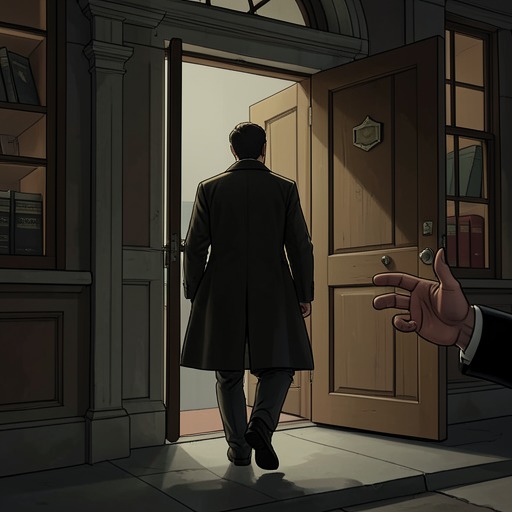
When the postman came upstairs and saw the masked Bank robber entering the open viewing, he hurried away and stumbled over the box. The fall dislodged wires from its top. The lights did not resemble an explosive device, but the disturbed box and visible wires became the focus of the officers’ attention as they made their way through the building. The explanation for the apparent danger was mundane: the box was the leftover result of a household quarrel, displaced by a startled postman.
Jim and Jack disagree
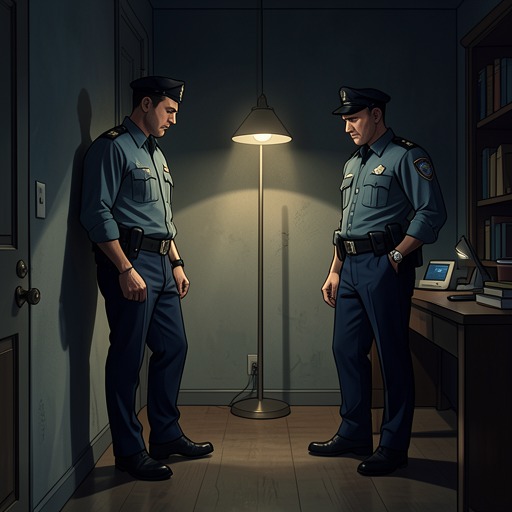
The elevator was out of order, so Jim and Jack climbed the stairs and checked whether any neighbors remained in the building. When they reached the landing with the box, Jim reacted with alarm and pulled Jack back. Jack immediately judged that it was not a bomb. Jim was not persuaded by his son’s assessment and asked how he could be sure. Their disagreement drew on more than the object in front of them: Jack was the younger officer, while Jim’s fear was sharpened by his sense of responsibility as a father.
Jack’s confidence did not erase the uncertainty of the situation. Earlier, he had admitted that he had never been involved in a hostage drama. Jim reminded him of his active-listening course and suggested that the training might help with a hostage-taker. Jack could not see how to apply it yet, but he needed a way to make contact with the person inside. He was already frustrated by the prospect that senior officers might criticize the local police for failing to manage the crisis themselves. The apparent bomb added a concrete danger to an operation that Jack was still trying to understand.
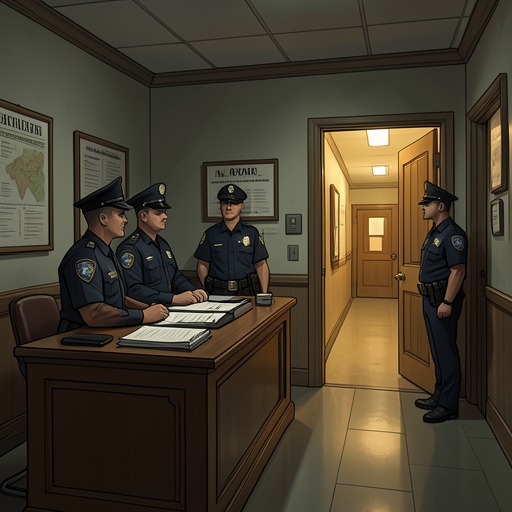
Jim chose to call Stockholm rather than let Jack continue up the stairs. Jack never forgave him for that decision. The call brought an immediate order from the police hierarchy for both officers to return to the street and wait for backup. The difficulty of finding help so close to New Year’s Eve became part of the delay. A specialist negotiator, several hours away by car, then called Jack and took charge of the operation, instructing him to contain the situation until the negotiator arrived. The outside authority did not share the local officers’ experience of the building, and Jack was left angrier than before.
The mistake shapes the operation
The emergency response was already being conducted with incomplete information. Jim had searched online for advice about hostage situations, while Jack had contacted the apartment’s owner to estimate how many people might be inside. The owner lived in another town and had not visited for a long time; she directed Jack back to the Real estate agent responsible for the viewing. A local police contact could offer only an uncertain description of the masked, relatively small hostage-taker. In that setting, the wires at the stairwell landing could prompt alarm even though they belonged to a box of lights.
The call for outside command changed more than the chain of authority. Jack believed that the order prevented him from showing that he could apprehend the Bank robber himself. Jim, in turn, felt responsible for having taken that opportunity from his son. Their feelings colored the decisions that followed. The false alarm therefore mattered not only because it stopped the officers on the stairs, but because it attached shame and resentment to a crisis in which both men already felt exposed and uncertain.
Later, while the hostages remained inside, Jack looked for another way to reach the Bank robber rather than send Jim up with pizzas. He worried that asking his father to enter the stairwell would make him responsible for testing the bomb theory with Jim’s safety. Jack proposed entering the building across the street to see whether its windows offered a view into the stairwell. His effort to find a safer vantage point recalls the earlier argument: he still believed the box was harmless, but he could not treat that belief as proof that every risk had disappeared.
Consequences and significance
The lights were not a bomb; the danger arose from what the officers feared they might be. The episode turns an everyday object into a test of judgment under pressure, while keeping the source of the alarm visible: a neighbor’s discarded decorations, a postman’s stumble, and wires no one expected to find on the landing. The ordinary cause does not make Jim’s fear incomprehensible, but it makes the gap between appearance and reality central to the scene.
For Jack and Jim, the incident becomes a lasting conflict between a son’s confidence in his own assessment and a father’s impulse to protect him. Jim’s choice brings the hierarchy into the crisis; Jack experiences it as a denial of his competence, and Jim carries responsibility for the consequence. Their later actions remain shaped by those feelings even as they confront the separate, immediate problem of communicating with the people inside. The mistaken bomb report thus serves as both a practical interruption and a personal rupture: a false alarm whose emotional effects persist after the wires have an explanation.